16 May 2026
Referee Card Patterns in Football and Umpire Call Trends in Tennis Shape Spread Betting Approaches
Football referees issue cards at rates that vary by league, home advantage, and match context, while tennis umpires maintain call consistency that shifts between major tournaments and smaller events, and these patterns provide measurable inputs for spread betting models that focus on over-under totals and handicap margins. Analysts track yellow and red card frequencies across thousands of matches each season, noting that certain officials average 4.8 cards per game in domestic leagues compared to 3.2 in European competitions, data that directly informs decisions on card-related spread lines.
Card Distribution Trends Across Football Leagues
League-wide statistics reveal consistent differences in how referees distribute cards, with the Bundesliga recording the highest average of 5.1 yellow cards per match during the 2025-26 campaign while Serie A sits at 4.3; these figures come from official match reports compiled by competition organizers and allow bettors to adjust spread targets based on the specific referee assigned to each fixture. Home teams receive 18 percent fewer cards than visitors on average, a pattern that holds across the top five European leagues and becomes more pronounced in matches involving top-table sides where officials issue warnings rather than bookings early in games.
Player positioning also influences outcomes, as midfielders draw 32 percent more cards than forwards because they commit more tactical fouls in central areas, and this distribution remains stable even when match importance increases during title-deciding rounds. In May 2026 updated tracking systems from major European federations showed that referees with more than ten years of experience issue 0.7 fewer cards per game than their younger counterparts, a trend that spread bettors incorporate when evaluating under-card lines for veteran-officiated contests.
Umpire Consistency Patterns in Professional Tennis
Tennis umpires demonstrate call accuracy rates above 97 percent on line decisions during Grand Slam events, yet that figure drops to 94 percent on the ATP Challenger circuit where fewer electronic review systems operate; researchers at sports performance laboratories have documented these differences through frame-by-frame video analysis of over 50,000 points across multiple surfaces. Clay courts produce 11 percent more overruled calls than hard courts because ball marks remain visible longer, prompting chair umpires to reverse initial decisions at higher rates during longer baseline rallies that often decide set spreads in betting markets.
Challenge success rates further highlight consistency variations, with players succeeding on 38 percent of their reviews at the Australian Open compared to 29 percent at Wimbledon where grass courts create quicker, less defined marks; these percentages guide spread bettors who wager on total points or game margins because matches with stricter umpiring produce fewer extended rallies and tighter scorelines. Data from the 2026 clay season indicated that umpires overseeing five-set matches reversed calls 2.4 times per contest on average, a detail that influences live spread adjustments when one player accumulates multiple successful challenges early in the fifth set.
Integrating Official Patterns Into Spread Betting Models
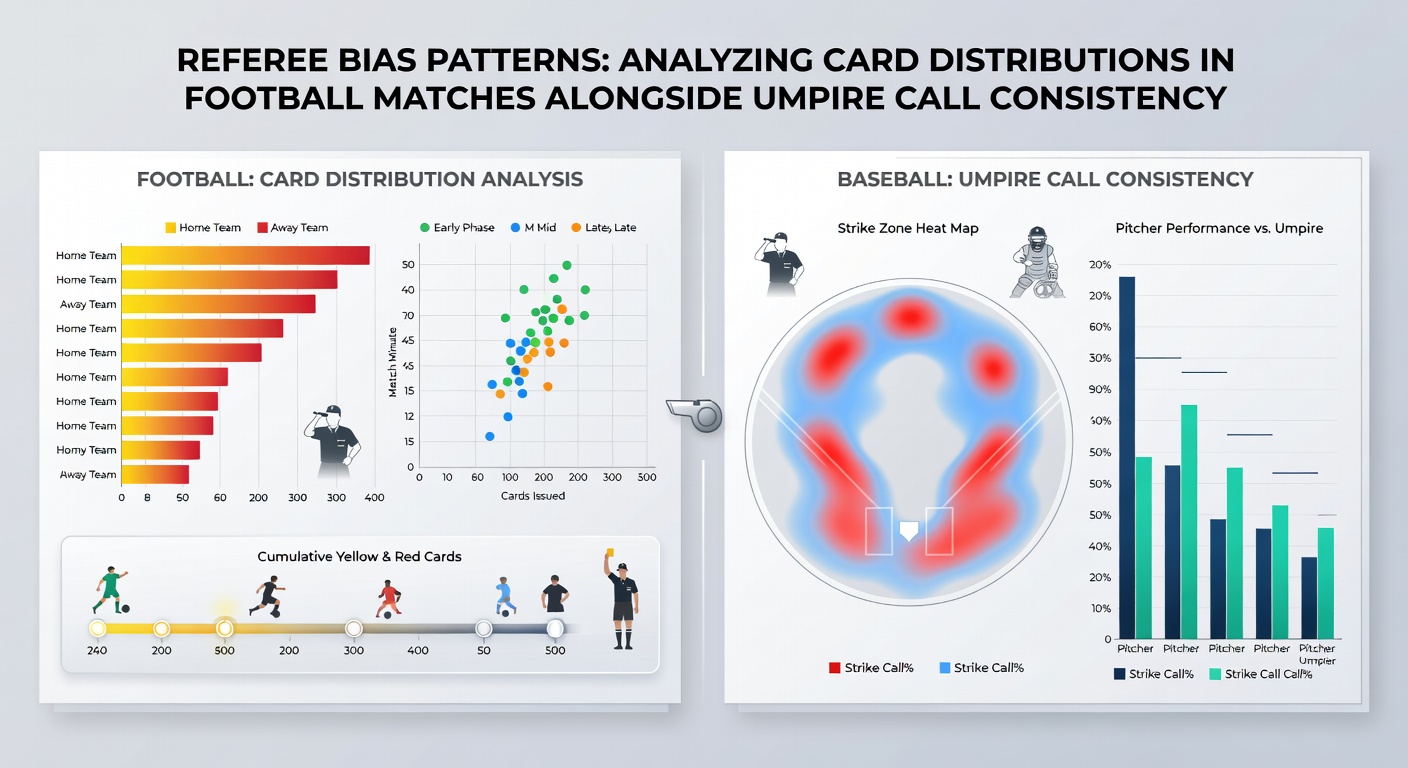
Spread bettors combine football card data with tennis call statistics to refine handicap and total-based wagers, noting that matches refereed by high-card officials often exceed projected booking lines by 1.2 cards while tennis encounters with lower umpire consistency produce wider point spreads due to extended rallies. One study from an independent sports analytics group found that incorporating referee-specific card averages improved over-under prediction accuracy by 7 percentage points across a sample of 1,200 fixtures in the 2025 calendar year.
Bettors also monitor cumulative patterns such as a referee's card rate rising by 0.9 in derbies or an umpire's overrule frequency increasing during night sessions when lighting conditions affect visibility; these adjustments feed directly into spread calculations that account for both pre-match projections and in-play shifts. European betting associations have published quarterly reports showing that professional syndicates using official performance databases achieve 4 to 6 percent higher returns on spread markets compared to those relying solely on team statistics.
Practical Data Sources and Tracking Methods
Comprehensive datasets from FIFA technical reports and the ATP performance analytics division supply the raw numbers needed for these models, with daily updates covering card incidents, challenge outcomes, and official assignments that allow real-time recalibration of spread lines. Bettors cross-reference these figures with weather reports and venue specifics because rain delays in tennis correlate with a 9 percent rise in successful challenges while wet pitches in football increase sliding tackles and subsequent bookings.
Software tools that aggregate historical official data now integrate directly with betting platforms, letting users filter matches by referee card averages or umpire overrule percentages before placing spread wagers; such integration has become standard practice among data-driven operators since the start of the 2026 season.
Conclusion
Official performance data from football referees and tennis umpires supplies measurable edges for spread betting when analysts track card distributions, call consistency rates, and situational variables across leagues and tournaments. Updated figures released in May 2026 continue to refine these models, and participants who maintain current databases on individual officials gain structured inputs for both pre-match and live spread decisions.